
On June 2, 2026, India’s Prime Minister welcomed Min Aung Hlaing to New Delhi for a five-day state visit. It was a massive—and deeply unsettling—diplomatic moment.
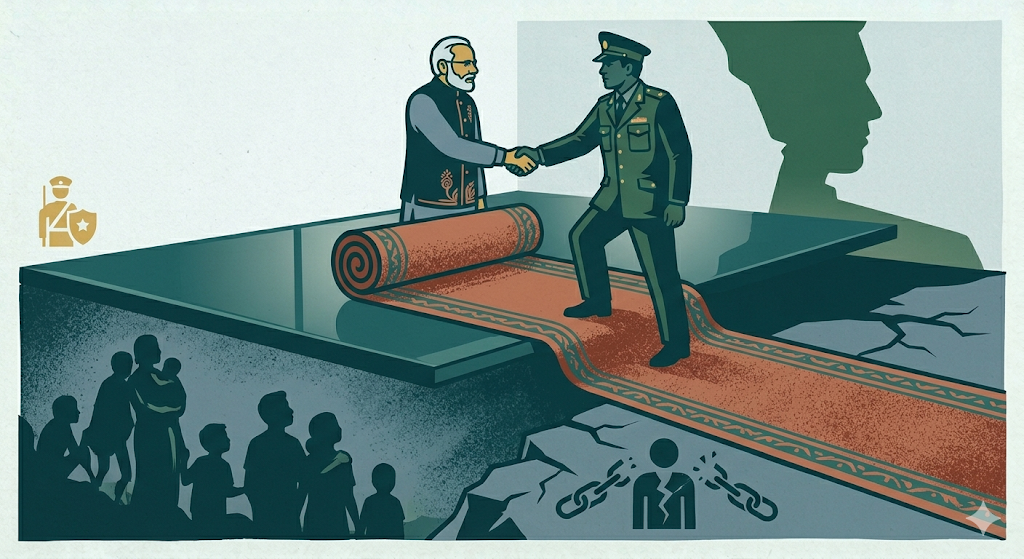
While most of the world refuses to even acknowledge Min Aung Hlaing as a legitimate leader because of the brutal 2021 coup, India chose a completely different path: a formal, five-day red-carpet welcome for the military regime. During the visit, the two sides smiled for the cameras and talked about boosting economic ties, trading in agriculture, energy, mining, and pushing forward massive connectivity projects like the Kaladan transport network.
But when India rolls out the red carpet, it actively chooses to look away from the human rights catastrophe unfolding right on its border.
To understand why India is making these deals, we have to look past the moral questions and dive into the cold, calculated mechanics of regional strategy:
- Securing the Border: India shares a massive, 1,643-kilometer border with Myanmar. New Delhi operates on the belief that the military junta is the only entity strong enough to control this border and cooperate on counter-insurgency.
- The Hunt for “Rebels”: A huge driver here is India’s desire to crush insurgent groups hiding out in Myanmar’s mountains, which New Delhi sees as a constant security threat to its northeastern states. But the reality on the ground is messy. Many of these “rebels” are actually ethnic minorities caught in the crossfire, hunted by both Indian and Myanmar forces—completely blurring the line between active combatants and persecuted civilians.
- The “China Factor”: This is perhaps the biggest piece of the puzzle. India is terrified of China’s massive footprint in the region. By keeping tight bonds with the regime in Naypyitaw, India is trying to stop the military from falling completely into Beijing’s lap, especially since China is already heavily invested in the China-Myanmar Economic Corridor.
- The Gateway to Asia: Myanmar is India’s vital “land bridge” to Southeast Asian markets. Mega-projects like the Kaladan Transit Transport Project and the India-Myanmar-Thailand Trilateral Highway are seen as absolute must-haves for the economic future of India’s landlocked northeastern states.
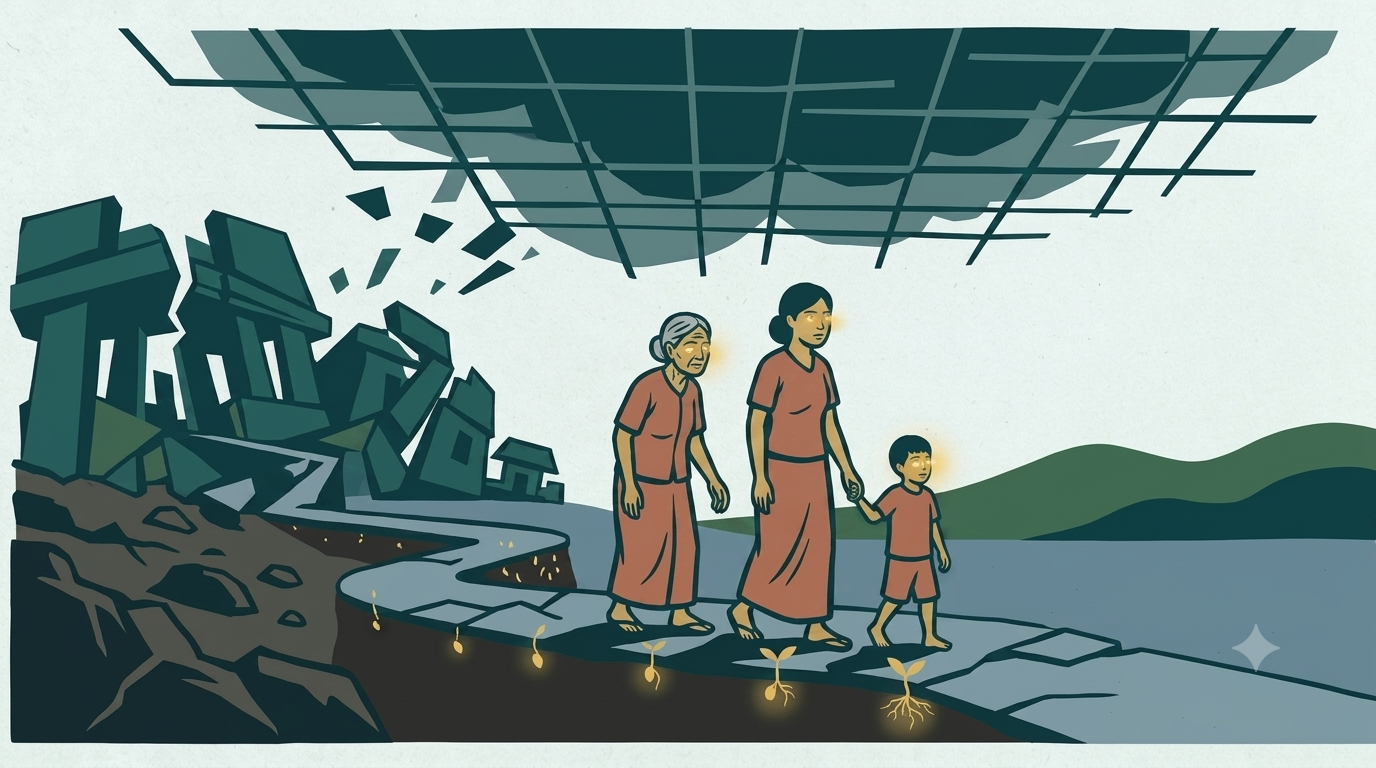
But when you step away from the maps and look at the actual ground reality, these choices hit hard. We aren’t talking about abstract politics here. We are talking about a system that has turned a chronic crisis into a sharp, terrifying daily catastrophe for millions of people.
By treating the junta as a legitimate partner, New Delhi is actively ignoring a grim reality: a military strategy designed to fracture communities, silence dissent, and leave millions of families without homes, security, or a shred of legal protection.
There is a profound moral vacuum in prioritizing “stability” and regional influence over the fundamental human rights of a population that is being systematically crushed. When a self-proclaimed major democracy chooses to completely bypass these humanitarian concerns, it forces us to confront a dark shift in how international politics works today.
And here lies the ultimate, bitter irony: Back in 1948, it was an Indian activist and delegate, Hansa Mehta, who fought tooth and nail during the drafting of the Universal Declaration of Human Rights. She was the one who successfully argued to change the wording from “All men are born free and equal” to “All human beings…”—ensuring that every single person, without exception, was included and protected.
Decades later, the very nation that helped expand that definition to protect all of humanity is actively looking away while human beings right across its border are being treated as entirely expendable.
It leaves us with questions that we need to start asking out loud:
- Why do we allow geopolitical maneuvering to render human rights reports essentially meaningless?
- Why is the global community so quick to toss its core values aside for strategic utility?
- And why are we drifting toward a future where the systematic erosion of human dignity is treated as just another boring footnote in modern politics?
Thank you for reading



Leave a Reply