
When you scan the daily news, Myanmar barely registers. It feels like a country the world stage has simply chosen to forget. But for the people on the ground, this isn’t an abstract headline—it’s a brutal, relentless reality that has defined entire generations.
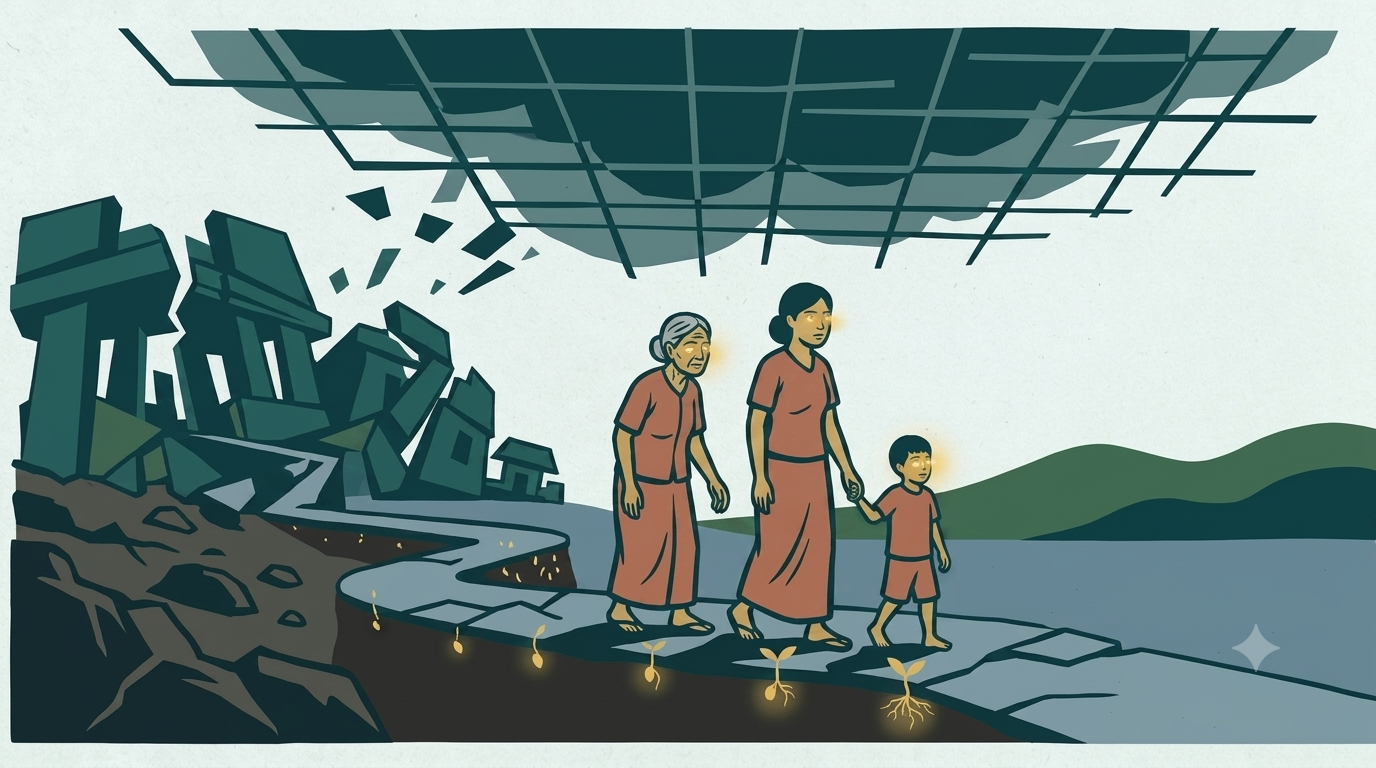
A lot of people think the nightmare started with the military coup in February 2021. And while that was a massive, shocking turning point, the truth runs much deeper. This crisis didn’t appear out of nowhere; it’s the latest, most violent chapter in a civil conflict that has been tearing the country apart for over 70 years.
What happened in 2021 didn’t create the instability—it just poured gasoline on a fire that was already burning. Since then, the violence has escalated from a chronic struggle into an absolute catastrophe. The military junta has tightened its grip on power, and they’ve turned their weapons directly against their own people. No one is safe, and no part of society has been left untouched.
The Crushing Weight of the Numbers
The verified data coming out of Myanmar today is hard to wrap your head around. According to the latest United Nations figures, over 3.7 million people are currently displaced inside the country. If you add those who managed to flee across the borders into Thailand, India, or Bangladesh, the number of forcibly displaced people skyrockets to over 5.3 million.
Think about that for a second. We aren’t just talking about abstract statistics. These are families who lost their homes, their livelihoods, and any sense of safety overnight. You can explore the official, heart-breaking scale of these movements in the UNHCR Myanmar Displacement Statistics.
And the tragedy has multiple layers. UN agencies report that 16.2 million people—nearly one-third of the entire population—are now in desperate need of humanitarian assistance. But because the military junta actively blocks aid corridors, cuts off supply chains, and restricts movement, international organizations are physically prevented from reaching those who are starving.
In fact, due to funding shortages and extreme security constraints, the UN can only realistically target 4.9 million of the most vulnerable people. The rest are completely on their own. You can read about the exact operational hurdles and target limits in the official UN Humanitarian Needs and Response Plan.
Stuck in Limbo
Once you are forced to run, the nightmare doesn’t end. It just changes shape. Families hiding in the jungles or crowded into makeshift border camps find themselves stuck in a terrifying legal vacuum. They have no legal protection, no access to healthcare, no schools for their children, and they face the constant threat of exploitation and human trafficking.
Worse still, the conflict has been compounded by severe natural disasters, like the recent catastrophic earthquakes, leaving communities completely shattered with nowhere left to rebuild.
The Junta’s entire strategy relies on a simple, cruel formula: crush fundamental human rights, silence anyone who speaks up, and systematically break the spirit of the community.
But what’s happening in Myanmar isn’t just a political chess game. It’s a story of raw human resilience against impossible odds. It is a situation that demands we look closer, listen to the facts, and refuse to look away—even when those in power do everything they can to make the world forget.
Thank you for reading



Leave a Reply