
My second engagement took me to PCEF School in Lvea, a small village near Siem Reap. This was a completely different setup compared to my previous experience in Laos. Here, I found an actual school with around 360 students, complete with classrooms, desks, a whiteboard, local teachers, and also learning materials, including little private chalkboards for practicing writing.
The goal remained the same: to teach children English alongside their public school education. In Cambodia, English is absolutely essential for further studies. While high schools offer decent English instruction, students often lack the basics, which are not typically taught in primary schools. For those who are not privileged enough to afford private English lessons, overcoming this hurdle can be nearly impossible. Many NGOs provide free education to less wealthy children, to fill this gap.
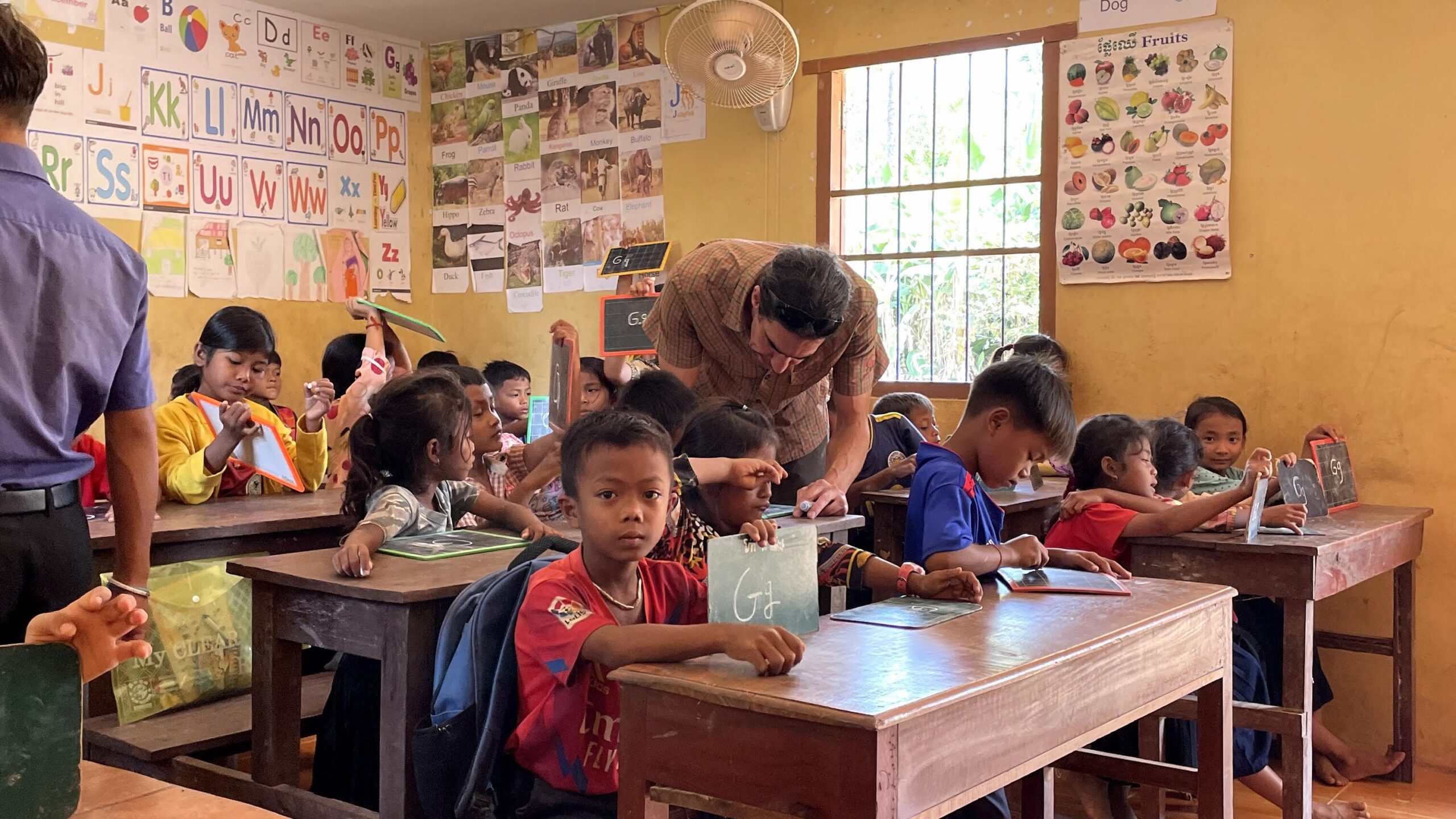
I was assigned to the absolute beginners, known as the ABC class, where I taught the students the English alphabet. One of my classes had an astonishing 58 students! They squeezed onto benches with hardly any space to write. I was genuinely impressed by how these young children chanted the alphabet together, and it was particularly heartwarming to see one student take the lead in reciting the letters while the rest of the class echoed them like a choir.
The objective was clear: to learn the alphabet and build upon their existing knowledge. I was informed that they had just reached the letter L, so I continued from there. I taught them the next letters, and they eagerly wrote them on their little chalkboards. I was surprised at how quickly they caught on, sometimes writing the letters before I could even demonstrate how to do it. I soon realized they were already familiar with the alphabet, allowing me to focus on improving their writing. I emphasized the height and position of the letters, and we began writing simple words.
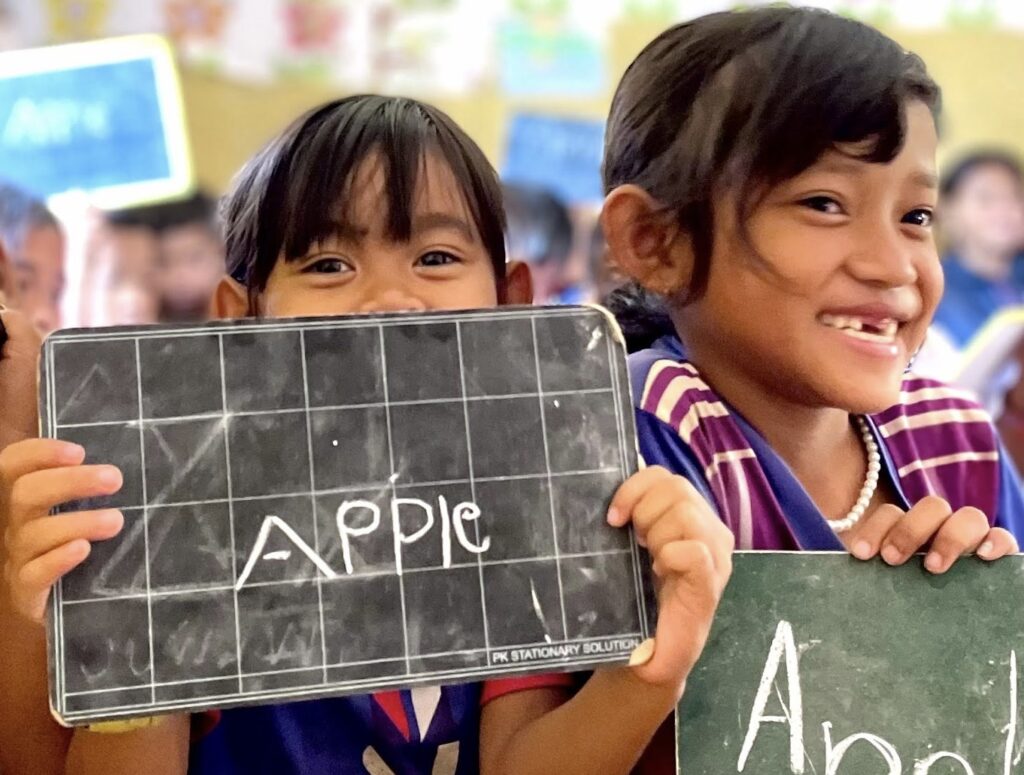
With limited teaching experience, I wanted to respect their existing system and avoid confusing the students. Therefore, I mirrored the local teacher’s methods. This approach allowed me to observe the classroom dynamics and adapt my teaching style gradually, introducing small changes as I saw fit. The students traditionally wrote letters on their chalkboards and repeated the alphabet, so I followed suit. Homework was usually to write the alphabet up to the learned letter three to five times, which I also adopted. However, I added a focus on letter height and neatness. I remember one student who used a ruler to write; I encouraged her to try without it. When I glanced back, she had picked up the ruler again, so I had to take it away. Later, I praised her for her beautiful writing without the ruler. I could literally see her confidence grow in that moment.
I believed it was important to support each student individually in their learning journey. Instead of treating the class as a single entity, I took the time to assist each student. Initially, this confused my local teacher, but after observing the progress of each student, he recognized that the time spent was a valuable investment, not a waste.
I also noticed that while the students knew the alphabet by heart, repeating it did not effectively enhance their reading skills, as they often didn’t even look at the letters. To address this, I introduced writing the letters on the whiteboard in random order and encouraged them to read the letters aloud. The difficulties they faced in identifying the letters confirmed my theory, and with this small adjustment, they began to actually learn to read.
Apart from these little adaptions, I also gamified the learning process to make it enjoyable for the children. Another notable difference I introduced was praising the students frequently for correct or even partially correct answers, or simply for their willingness to try. It seemed that the local teachers primarily focused on criticism, so this approach was refreshing for the students.
My Takeaway
Introducing small changes like this, a volunteer can significantly influence the teaching techniques of local educators. Even without extensive teaching experience, we bring diverse backgrounds and perspectives on teaching and learning.
After observing, the local teachers can decide for themselves what changes make sense for them and their students, and adapt these.
If we don’t bring in a whole new way of teaching and only adapt the existing style a little bit, this also makes learning more diverse for the students without it getting too confusing..
The teaching style I observed leaves considerable room for improvement. It often relies on rote learning, class repetition, and a focus on weaknesses. I hope that volunteers can introduce enhancements gradually, fostering a more dynamic and supportive learning environment for the students.
For me, the next step was to join a TEFL course, to improve the input that I could bring. Ittt was so kind to offer an online course to me and support my volunteering by waiving the fee. Thank you very much for this!
Thank you for reading



Leave a Reply